
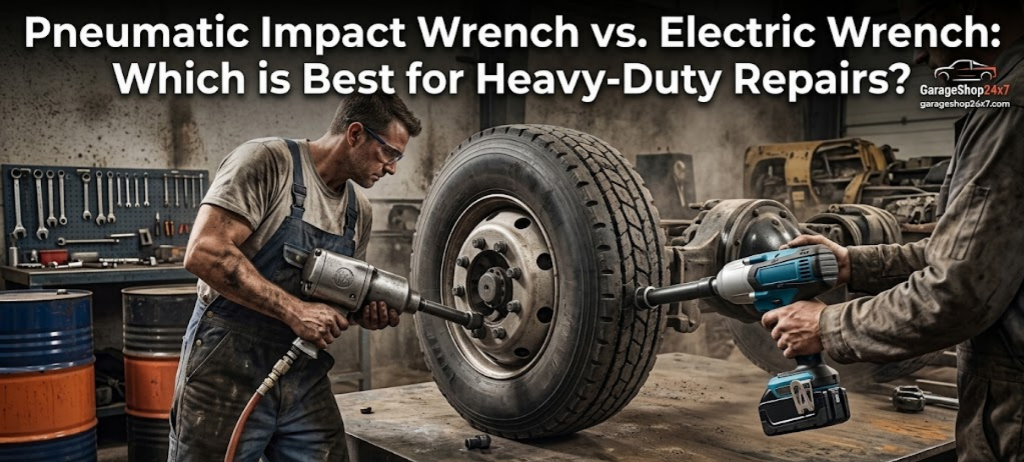
When servicing commercial commercial fleets, heavy machinery, or rusted automotive undercarriages, selecting the right high-torque fastening tool directly dictates your turnaround time and shop productivity. Mechanical workshop managers and automotive technicians constantly compare the pneumatic impact wrench vs. electric wrench to determine which system delivers the raw power, continuous duty performance, and longevity needed for demanding automotive overhauls.
Choosing the right shop machinery goes beyond simple preference—it impacts overall shop safety, operator ergonomics, air compressor sizing, and long-term utility expenses. In this comparison, we break down the operational mechanics, peak torque output, maintenance demands, and overall cost-efficiency of pneumatic air impact guns versus cordless and corded electric wrenches. Whether you plan to source high-grade garage equipment spare parts in India or source reliable power tools online, this guide will help you make a confident, profit-focused buying decision.
Understanding the Core Differences: How They Work
To choose between air-powered and motor-driven impact tools, you must first understand how each mechanism converts energy into heavy-duty rotational strikes (nut-busting torque).
[ PNEUMATIC SYSTEM ] ──► [ Air Compressor ] ──► [ Air Hose ] ──► [ Pneumatic Motor ] ──► [ Twin Hammer Mechanism ] ──► Instant High Torque

[ ELECTRIC SYSTEM ]  ──► [ Li-Ion Battery ]  ──► [ Brushless Motor ] ──► [ Gearbox & Anvil ] ──► [ Pulsed Torque Strikes ] ──► Portable Fastening
What is a Pneumatic Impact Wrench?
A pneumatic impact wrench runs on compressed air supplied by a stationary or portable shop air compressor. Compressed air flows through internal vanes, driving a heavy internal rotor connected to a precision hammer-and-anvil assembly (often a twin-hammer design).
Because air tools do not house internal motors, armature coils, or heavy batteries, they deliver an exceptional power-to-weight ratio. They are the industry standard for high-volume tire service bays, heavy commercial fleet workshops, and industrial assembly lines where tools operate continuously for hours.
What is an Electric Impact Wrench?
Electric impact wrenches are powered either by direct AC grid power (corded) or high-capacity lithium-ion battery packs (cordless). Modern electric units utilize electronic brushless motors combined with intelligent control boards to manage speed, variable drive modes, and automatic shutoff parameters.
While cordless electric impact wrenches offer complete mobility across roadside service calls and multi-bay garages without trailing air hoses, the motor, internal electronic circuitry, and battery pack add noticeable weight to the handle.
Key Performance Factors Compared
+-----------------------------------------------------------------------------------------+
|                              PERFORMANCE METRICS OVERVIEW                               |
|                                                                                         |
|  TORQUE & DUTY CYCLE   │ Pneumatic leads in sustained duty cycles and extreme torque.   |
|  ERGONOMICS & WEIGHT   │ Pneumatic tools are lighter; Electric eliminates hose drag.    |
|  SETUP & MOBILITY      │ Electric wins on portability; Pneumatic requires air lines.   |
|  TOOL DURABILITY       │ Pneumatic handles dust, dirt, and drop impacts with lower wear. |
+-----------------------------------------------------------------------------------------+
1. Torque Output and Breakaway Force
Heavy-duty repairs require serious “nut-busting” torque to free rusted, heat-fused suspension bolts, axle nuts, and commercial lug nuts.
- Pneumatic Wrenches: Air tools excel at producing massive peak loosening torque. Industrial 1/2-inch and 1-inch drive pneumatic impact wrenches can deliver anywhere from 1,000 Nm to over 3,200 Nm of maximum breakaway torque when paired with a properly regulated air compressor operating at 90–120 PSI.
- Electric Wrenches: High-end brushless electric impact wrenches have closed the gap significantly, offering up to 850 Nm to 1,500 Nm of breakaway torque. However, sustained torque output on an electric tool can drop as the battery charge depletes or as heat builds up inside the motor housing under extreme loads.
2. Weight, Balance, and Operator Fatigue
Technicians using an impact tool for 6 to 8 hours a day must consider tool weight to prevent wrist strain and physical fatigue.
- Pneumatic Advantages: Because the motor is powered purely by air pressure, a standard 1/2-inch pneumatic impact wrench typically weighs between 1.8 kg and 2.2 kg. The lack of a bottom-heavy battery makes it well-balanced for overhead work under vehicle lifts.
- Electric Trade-offs: A comparable high-torque cordless electric wrench with a 5.0Ah lithium battery often weighs between 2.8 kg and 3.8 kg. While you avoid dragging a stiff rubber air hose, handling the heavier unit overhead during extended repair shifts requires greater physical effort.
3. Duty Cycle and Heat Management
Continuous operation without thermal shutdown is critical for high-volume commercial repair centers.
- Pneumatic Resilience: Compressed air continuously cools the internal components as it expands through the air motor exhaust. Pneumatic impact tools can run nearly nonstop without thermal limitations or risk of burnout.
- Electric Sensitivity: Heavy-duty electric impact wrenches generate internal electrical heat during stubborn bolt removals. Prolonged hammering against frozen fasteners triggers thermal overload protection, requiring cooling breaks or spare battery swaps.
Detailed Comparison Table
When evaluating power options for professional garage bays or mobile service units, compare these essential parameters:
| Feature / Metric | Pneumatic Impact Wrench | Electric (Cordless) Impact Wrench |
| Primary Power Source | Compressed Air (90–120 PSI, 5–15 CFM) | 18V / 21V Lithium-Ion Battery or AC Cord |
| Maximum Torque Capacity | Extremely High (Up to 3,200+ Nm on 1″ drive) | High to Very High (Up to 1,500+ Nm) |
| Tool Weight (Excluding Hose/Battery) | Lightweight (1.5 kg – 2.5 kg) | Moderate to Heavy (2.5 kg – 4.0 kg) |
| Continuous Duty Cycle | Unlimited (Cooled by expanding exhaust air) | Limited by battery runtime & motor heat |
| Mobility & Setup | Restricted to air hose radius & shop compressor | 100% Portable (Ideal for roadside repairs) |
| Maintenance Requirements | Daily air line oiling & moisture draining | Battery care, dust blower cleaning |
| Tool Durability & Lifespan | Very High (Simple mechanical construction) | High (Electronic boards vulnerable to drops) |
| Initial System Investment | Lower tool cost (Requires air compressor) | Higher tool & battery kit cost |
Cost Analysis: Initial Investment vs. Long-Term Value
Understanding the true total cost of ownership involves looking beyond the sticker price of the individual tool:
[ PNEUMATIC COST STRUCTURE ]  ──► Low Tool Cost + High Initial Compressor Infrastructure
[ ELECTRIC COST STRUCTURE ]   ──► High Tool & Battery Pack Cost + Zero Air Infrastructure Needed
- Air Tool Infrastructure: An industrial pneumatic impact wrench is relatively affordable. However, if your shop does not already have a dedicated multi-stage air compressor, air filter-regulator-lubricator (FRL) units, and plumbed air lines, the initial setup cost increases. If air lines are already installed across your workshop bays, adding pneumatic impact wrenches is highly economical.
- Electric System Investments: High-torque cordless electric tools carry a higher initial price tag due to advanced brushless motors, smart electronics, and lithium-ion batteries. However, they require zero compressor setup, making them a cost-effective choice for mobile mechanics, pop-up service trucks, or expanding workshops adding temporary bays.
- Replacement & Maintenance Parts: Over a 5-to-10-year service life, pneumatic tools are easier to rebuild using inexpensive O-rings, vanes, and hammer kits. Maintaining reliable access to garage equipment spare parts in India ensures your pneumatic line runs continuously with minimal shop downtime.
Which Tool Fits Your Specific Repair Setup?
Choose a Pneumatic Impact Wrench If:
- You run a fixed, high-volume automotive repair garage, commercial fleet facility, or tire fitment center.
- Your workshop is already plumbed with an adequate industrial air compressor delivering consistent CFM at 90+ PSI.
- You perform continuous, heavy-duty suspension, chassis, and engine teardowns where maximum power-to-weight ratio is crucial.
- You prefer rugged, drop-resistant tools with simple mechanical rebuild options.
Choose an Electric Impact Wrench If:
- You operate a mobile repair van, roadside assistance vehicle, or perform field maintenance on agricultural/construction sites.
- You need instant tool deployment without dragging air hoses across busy workshop floors.
- You operate a small or medium garage bay without existing compressed air infrastructure.
- You require multi-speed torque selection, LED illuminators, and digital auto-stop controls for precise fastener tightening.
Learn more about compressed air safety, pressure regulation, and tool maintenance guidelines at official safety and engineering bodies like the Compressed Air and Gas Institute (CAGI).
Conclusion
Both pneumatic and electric impact wrenches deliver dependable high-torque performance for modern heavy-duty maintenance. The ideal choice depends primarily on your existing shop infrastructure, daily workload volume, and mobility demands.
Pneumatic impact wrenches remain the uncontested standard for fixed commercial workshop bays requiring high torque, low tool weight, and continuous daily operation. Meanwhile, modern brushless electric wrenches provide unmatched flexibility, portability, and rapid deployment for mobile repair teams and versatile shop spaces.
Equip Your Workshop with Industry-Grade Tools
Upgrading your repair bay or building out a new workshop? Explore our full range of heavy-duty air tools, power equipment, and genuine spare parts built for demanding professional service.
[Browse Our Workshop Equipment Collection Online at GarageShop24x7 Today] to secure top-tier power tools, access expert technical guidance, and keep your service bays running at maximum efficiency!
Frequently Asked Questions (FAQs)
Pneumatic impact wrenches generally deliver higher sustained breakaway torque and superior power-to-weight performance under continuous heavy-duty use. However, modern high-torque brushless electric wrenches offer comparable power for short bursts on standard passenger and light commercial fasteners.
To operate a standard 1/2-inch pneumatic impact wrench efficiently, you need an air compressor delivering 90 PSI with an airflow rating of 4 to 6 CFM (Cubic Feet per Minute) and a tank size of at least 50 to 100 liters for continuous garage work.
Add 4 to 6 drops of specialized air tool oil into the air inlet before daily use, maintain an inline filter-regulator-lubricator (FRL) unit, drain water moisture from your compressor tank daily, and periodically grease the internal impact hammer mechanism.
Heavy-duty high-torque electric impact wrenches with 3/4-inch or 1-inch drive anvils delivering over 1,500 Nm of breakaway torque can remove commercial truck lug nuts. However, high-volume truck tire bays still prefer 1-inch pneumatic wrenches due to lower weight and continuous duty cycles.