

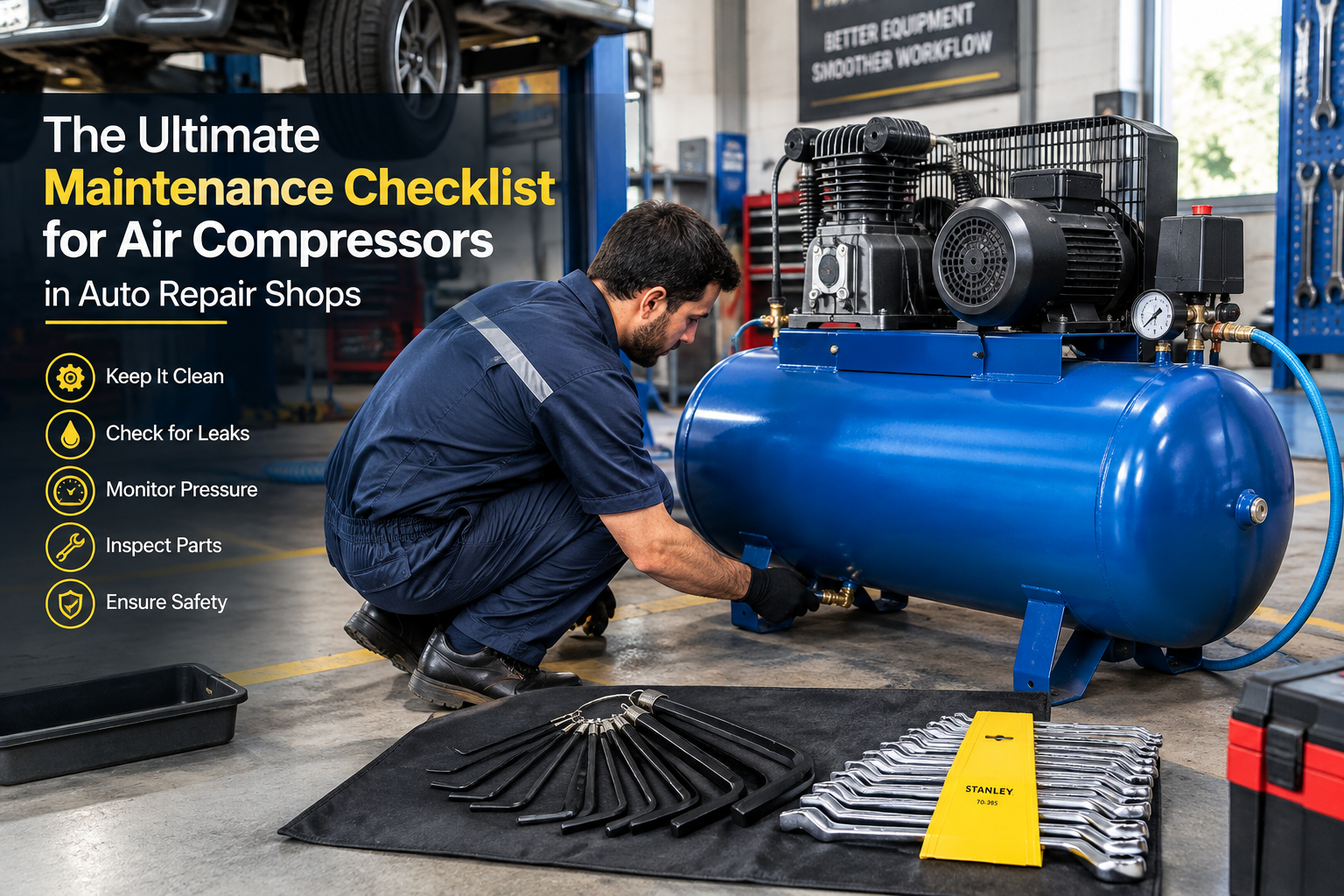
In any busy automotive workshop, compressed air is as vital as electricity. From powering impact wrenches and pneumatic lifts to operating tire changers, air compressors keep daily operations running smoothly. However, neglecting preventative care can lead to unexpected breakdowns, costly repairs, and dangerous pressure losses. Following a structured air compressor maintenance checklist for auto repair shops ensures your equipment performs reliably every day.
Proper maintenance does more than prevent mechanical failure—it protects your investment in high-quality pneumatic gear and specialty hand tools. In this comprehensive guide, we cover daily, weekly, monthly, and annual maintenance steps tailored specifically for busy auto repair facilities.
Why Air Compressor Maintenance is Essential for Your Workshop
Ana air Compressor Maintenance in an auto repair shop operates under demanding conditions. Moisture, dust, oil sludge, and heat constantly degrade internal components. Without routine checks, performance drops quickly, leading to higher electricity bills and damaged air tools.
Here are the top reasons to keep your compressed air system in peak condition:
- Extends Tool Lifespan: Clean, dry compressed air prevents rust and internal wear inside your pneumatic wrenches, ratchets, and tire servicing equipment.
- Reduces Energy Costs: A struggling or leaking compressor draws significantly more power to maintain operating pressure.
- Prevents Downtime: Scheduled preventative maintenance avoids surprise breakdowns during peak work hours.
- Ensures Safety: Compressed air tanks operate under high pressure. Inspecting relief valves and tank integrity prevents catastrophic failures.
Daily Air Compressor Maintenance Checklist
Daily checks take only a few minutes but catch up to 80% of common compressor issues before they turn into major repairs.
1. Drain Moisture from the Receiver Tank
Compression generates heat and water vapor. As air cools inside the tank, water settles at the bottom.
- Open the manual drain valve at the bottom of the receiver tank at the end of every workday.
- If you use an automatic drain valve, verify daily that it is cycling properly.
- Water left in the tank causes internal corrosion, reduces air storage capacity, and travels downstream into your air tools.
2. Check Oil Levels (For Oil-Lubricated Compressors)
Operating an air compressor with low oil level causes rapid heat build-up and piston or screw wear.
- Check the sight glass or dipstick before turning on the machine.
- Ensure the oil level stays within the recommended mark.
- Top up using non-detergent compressor oil specified by the manufacturer.
3. Inspect for Air Leaks and Unusual Noises
Air leaks cost auto repair shops hundreds of dollars in wasted electricity every year.
- Listen for hissing sounds around fittings, couplers, pressure switches, and pipe joints.
- Check quick-connect fittings connected to essential Automotive Hand Tools and pneumatic lines.
- Fix minor leaks immediately by replacing worn seals or applying thread sealant.
Weekly Air Compressor Maintenance Tasks
Weekly routines focus on air quality and system pressure stability.
+-------------------------------------------------------------------+
|               WEEKLY COMPRESSOR CHECKLIST                         |
+-------------------------------------------------------------------+
|  [ ] Clean/Inspect Intake Air Filters                            |
|  [ ] Check Belt Tension and Alignment                             |
|  [ ] Inspect Hoses, Fittings, and Couplers                       |
|  [ ] Test Safety Relief Valve Operation                           |
+-------------------------------------------------------------------+
1. Clean the Air Intake Filter
Auto repair shops are naturally dusty environments filled with metal shavings, rubber debris, and sanding dust.
- Remove the intake filter element and blow off surface dust with low-pressure air.
- Inspect for torn filter media or heavy oil contamination.
- Replace filters immediately if they appear clogged or damaged.
2. Check Drive Belt Tension and Condition
Belt-driven compressors rely on proper tension to transfer energy efficiently from the motor to the pump.
- Inspect belts for cracks, fraying, or slippage.
- Press down on the center of the belt; it should deflect about 1/2 inch under moderate thumb pressure.
- Re-align pulleys if you notice uneven belt wear.
3. Test Safety Relief Valves
The safety valve protects the receiver tank from over-pressurization.
- Pull the ring on the safety valve while the system is slightly pressurized to confirm it opens freely.
- Listen for air release and verify that the valve snaps back into place when released.
Monthly Air Compressor Maintenance Protocols
Monthly maintenance dives deeper into filtration systems and component security.
1. Inspect and Clean In-Line Moisture Separators and Filters
Dry air is crucial when operating tire machines and precision garage equipment. Water in the line ruins tire repair patches and damages pneumatic cylinders.
- Clean or replace in-line filter cartridges.
- Ensure desiccant air dryers and coalescing filters are operating properly.
- When performing tire repair work with a complete Tubeless Tyre Repair Kit, clean, moisture-free air ensures clean surface preparation and strong rubber vulcanization.
2. Tighten All Fasteners and Bolts
Vibration from the compressor pump loosens bolts over time, leading to head gasket leaks and alignment issues.
- Check flywheel bolts, motor mounts, and head bolts.
- Tighten hardware using durable Stanley hand tools to match recommended torque specifications.
3. Clean Compressor Exterior and Cooling Fins
Dust acts as an insulator, trapping heat inside the pump and motor.
- Wipe down motor housing, pump fins, and intercoolers using appropriate Tyre puncture repair tools cleaning solutions or industrial degreasers.
- Ensure cooling fans have unobstructed airflow.
Quarterly and Annual Air Compressor Maintenance Care
Long-term care protects your compressor’s heavy internal components and maintains warranty compliance.
1. Complete Oil Change (Every 500 to 1,000 Hours)
Engine oil and compressor oil are not interchangeable. Compressor oil resists thermal breakdown and lacks detergents that foam under high pressure.
- Drain oil completely while the pump is still warm.
- Refill with fresh, high-grade synthetic or mineral compressor fluid.
- Replace the oil filter element on rotary screw units.
2. Inspect Electric Motors and Wiring
- Inspect power cords, pressure switch contacts, and starter relays for burning or corrosion.
- Blow out dust accumulated inside the electric motor housing.
3. Annual Tank Pressure Inspection
- Have a certified inspector check the structural integrity of your air tank.
- Inspect for deep external rust spots or internal pitting near the bottom drain line.
Integrating Compressed Air with Workshop Tools
Your air compressor works in tandem with a wide variety of manual and power tools in an auto repair shop. While air power handles heavy lifting and fast bolting, combining air tools with high-grade manual tools creates an efficient, foolproof workshop workflow.
+------------------------------------------------------------------------+
|                   AUTOMOTIVE WORKSHOP EQUIPMENT SETUP                 |
+------------------------------------------------------------------------+
|  PNEUMATIC SYSTEM          -->  MANUAL & SPECIALTY TOOLS              |
|  - Air Compressor              - Tire Changers & Mount Tools          |
|  - Impact Wrenches             - Wheel Nut Wrenches & PCD Gauges      |
|  - Bead Seaters                - Puncture Repair Kits & Pistol Grips  |
+------------------------------------------------------------------------+
Tire Servicing and Wheel Alignment Workflow
When dismounting and repairing heavy passenger vehicle tires:
- Precision Measurement: Before service, technicians measure lug patterns using a dedicated PCD Measuring Tool For 3 4 5 Lugs 95 160 mm 2 to select correct wheel fitments.
- Wheel Demounting: Operate pneumatic tire changers equipped with a specialized Tapered 33mm 29mm Standard Steel Mount Demount Tool Passenger Car Tyre Changer for smooth, scratch-free tire removal.
- Manual Backup & Torque Finalization: Before or after using air impact guns, technicians rely on a heavy-duty Four Way Wheel Nut Wrench to ensure cross-pattern lug nut tightness without stripping threads.
Puncture Repair Best Practices
When performing tire repair work powered by air-driven buffing tools:
- Use reliable manual tools like an 8 Open Eye Needle In Pistol Grip Tyre Repair Tool for insertion and sealing.
- Equipping your facility with general professional Workshop Tools and complete commercial Garage Tools keeps your air tools supported by essential hand equipment.
Summary Air Compressor Maintenance Checklist Matrix for Auto Repair Shops
Use this quick-reference table for daily workshop operations:
| Maintenance Task | Daily | Weekly | Monthly | Yearly |
| Drain Tank Moisture | X | |||
| Check Oil Level | X | |||
| Listen for Air Leaks | X | |||
| Clean Intake Air Filter | X | |||
| Check Belt Tension | X | |||
| Test Safety Valve | X | |||
| Check Fasteners & Bolts | X | |||
| Inspect Line Filters | X | |||
| Complete Oil Change | X | |||
| Inspect Electrical System | X |
Conclusion
A well-maintained air compressor is the heart of every productive auto repair shop. By enforcing this simple air compressor maintenance checklist for auto repair shops, you eliminate unexpected downtime, lower energy expenses, and safeguard your valuable shop equipment for years to come.
For detailed pressure vessel safety regulations and workplace standards, consult official guidelines from the Occupational Safety and Health Administration (OSHA).)
Upgrade Your Auto Workshop Today!
Need reliable garage equipment, tire repair kits, or professional hand tools to complement your workshop setup? Explore our complete range of high-performance tools at GarageShop24x7 and keep your shop operating at peak performance!
Air Compressor Maintenance – Frequently Asked Questions
How often should I drain water from my air compressor tank?
You should drain moisture from the air compressor tank daily or after every heavy shift in your auto repair shop. Accumulated moisture causes inner tank rust and damages pneumatic air tools.
What tools do I need for routine air compressor maintenance?
Essential maintenance requires fundamental shop tools like Stanley hand tools to check fittings and inspect air filters[cite: 1]. Additionally, having reliable garage tools and wrenches ensures quick oil changes and belt tension checks[cite: 1].
Why is my air compressor losing pressure quickly?
Common causes include air line leaks, clogged intake filters, worn-out piston rings, or loose connections. Inspecting your compressed air lines using essential workshop tools helps identify leaks fast[cite: 1].
How often should air compressor oil and air filters be changed?
Air filters should be cleaned weekly and replaced every 3 to 6 months depending on shop dust levels. Compressor oil should be changed every 500 to 1,000 operating hours or as recommended by the manufacturer.